
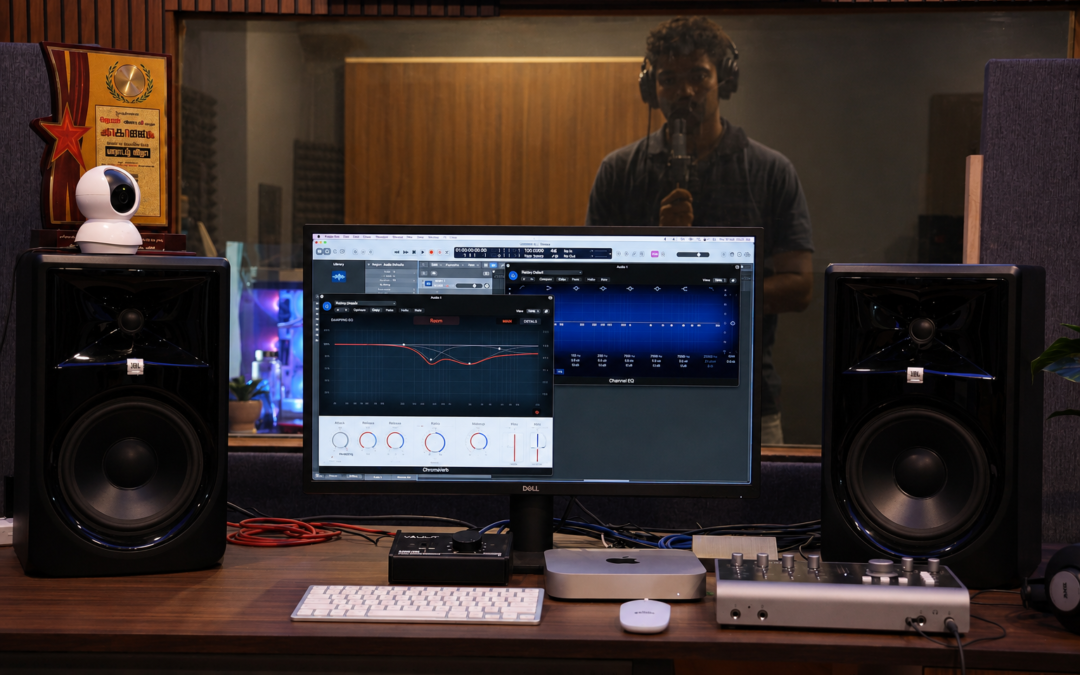
If you’ve ever wondered what is mixing and mastering, you’re not alone. These two terms get thrown around constantly in the music world, and most singers, especially first-time artists, use them interchangeably — even though they’re two completely different stages of the recording process that happen at very different points in a song’s journey from raw recording to finished release. Understanding what is mixing and mastering will help you talk confidently with your engineer, know exactly what you’re paying for, and set realistic expectations for how your song will sound at each stage of production.
As the best music dubbing studio in Tiruvannamalai, we get asked this question in almost every first session, usually right after a singer hears their raw, unmixed vocal for the first time and wonders why it doesn’t yet sound like the polished songs they hear on the radio or on streaming platforms. So let’s break it down clearly, step by step, covering exactly what is mixing and mastering, why both matter, and how they work together to create a finished, release-ready track.
Contents
- 1 What is Mixing?
- 2 What is Mastering?
- 3 What is Mixing and Mastering — The Key Difference
- 4 Why Understanding What is Mixing and Mastering Matters for Singers
- 5 How Mixing and Mastering Work Together in a Real Project
- 6 Tools and Techniques Used in the Process
- 7 Common Misunderstandings About What is Mixing and Mastering
- 8 Frequently Asked Questions
- 9 Final Thoughts
What is Mixing?
Mixing is the process of taking all the individual recorded elements of a song — vocals, guitar, drums, keys, bass, backing harmonies — and blending them together into one balanced, cohesive track. Before mixing, each instrument and vocal is recorded on a separate track, almost like separate ingredients that haven’t been cooked together yet. Understanding this stage is a big part of understanding what is mixing and mastering as a whole, since it’s the foundation everything else builds on.
During mixing, an engineer adjusts:
- Volume levels — making sure the vocal isn’t buried under the instruments, or the drums aren’t overpowering everything else
- Equalization (EQ) — shaping the tone of each element so instruments don’t clash in the same frequency range
- Panning — placing sounds left, right, or center in the stereo field for a wider, more natural listening experience
- Compression — smoothing out volume inconsistencies so a vocal doesn’t jump from too quiet to too loud
- Effects — adding reverb, delay, or other creative touches that give the song its final character
This is the stage where a song truly starts to sound like a “finished” track rather than a collection of separate recordings. A skilled mixing engineer spends most of their time here, often going back and forth between elements dozens of times before the balance feels right — which is why mixing alone can sometimes take longer than the actual recording session.
What is Mastering?
Once mixing is complete, mastering is the final polishing stage before a song is ready for release. If mixing is about balancing individual elements, mastering is about polishing the entire song as a whole.
During mastering, an engineer:
- Adjusts overall loudness so the track matches industry standards for streaming platforms like Spotify, YouTube, and JioSaavn
- Applies final EQ adjustments across the whole mix, not individual elements
- Ensures the song sounds consistent across different playback devices — phone speakers, car audio, headphones, and studio monitors
- Adds subtle final touches like stereo widening or gentle compression to give the track commercial punch
Mastering is often described as the difference between a song that sounds “good” and one that sounds “professionally released.” According to Wikipedia’s overview of audio mastering, the process ensures a recording translates well across every playback system, which is exactly why it can’t be skipped.
Many singers who understand mixing still get confused about what is mixing and mastering once mastering is introduced, mainly because mastering happens on the whole song file rather than on separate instrument or vocal tracks. This is also why mastering engineers often work with reference tracks — commercially released songs in a similar genre — to make sure the loudness and tone of your song sits comfortably alongside music that’s already out in the world.
What is Mixing and Mastering — The Key Difference
Now that we’ve covered both individually, here’s the simplest way to understand what is mixing and mastering when compared side by side:
| Mixing | Mastering |
|---|---|
| Works on individual tracks (vocals, instruments) | Works on the final combined mix as one file |
| Balances levels, panning, and effects | Polishes overall loudness and consistency |
| Makes elements work together | Makes the song release-ready |
| Done first | Done last, right before release |
Think of mixing as cooking a dish — combining ingredients so they taste right together — and mastering as plating and presenting the final dish so it looks good no matter where it’s served.
Why Understanding What is Mixing and Mastering Matters for Singers
Many independent singers assume recording is the only step that matters, and that mixing and mastering are just “technical extras.” In reality, a poorly mixed and mastered song can make even a great vocal performance sound amateur, while a well mixed and mastered track can make an average performance sound polished and radio-ready.
This is one of the biggest reasons singers choose the best music dubbing studio in Tiruvannamalai over recording independently at home — because the value isn’t just in the recording booth, it’s in everything that happens after you leave it. A home setup might capture a clean vocal, but without proper mixing and mastering, that vocal often sounds flat, thin, or out of place once placed against a full instrumental track. This is especially true for devotional and dubbing work, where the final track needs to sit correctly alongside pre-existing background music or a film’s original audio, and even small inconsistencies in loudness or tone become immediately noticeable to listeners.
There’s also a practical financial angle worth understanding here. Investing in proper mixing and mastering upfront usually costs far less than trying to fix a poorly finished track later, or worse, re-recording a song entirely because the first version didn’t sound release-ready. Singers who understand this tend to budget for the full process from the start, rather than treating mixing and mastering as optional add-ons.
How Mixing and Mastering Work Together in a Real Project
At Independent Record Studio, every project goes through both stages before it’s considered complete. Here’s what that typically looks like:
- Recording — vocals and instruments are captured cleanly, take by take
- Editing — the best takes are selected, timing is tightened, and any unwanted noise is removed
- Mixing — all elements are balanced, EQ’d, and blended into one cohesive sound
- Mastering — the finished mix is polished for loudness, consistency, and playback readiness across platforms
- Final delivery — the artist receives a release-ready track
With 10+ years of combined experience, 500+ dubbed songs, and 200+ artists served, the team understands exactly how much of a difference proper mixing and mastering makes to the final sound — which is a big part of why singers across the region consider it the best music dubbing studio in Tiruvannamalai for both dubbing and independent music projects.
(Image suggestion: waveform comparison before/after mastering — Alt text: “before and after mastering example, what is mixing and mastering explained”)
Tools and Techniques Used in the Process
Both mixing and mastering rely on a mix of hardware and software tools, though the specific techniques vary by engineer and by song genre. Common tools include digital audio workstations (DAWs) for arranging and processing tracks, studio-grade monitor speakers for accurate playback, equalizers for shaping frequency balance, compressors for controlling dynamics, and limiters used primarily at the mastering stage to control final loudness without distortion.
For devotional and dubbing work specifically, engineers also pay close attention to how a vocal sits against pre-existing instrumental tracks or a film’s original audio — this often requires more careful EQ matching during mixing than a standard independent single would need, since the goal is blending seamlessly with audio that’s already been finalized elsewhere. Reverb and spatial effects are also used more conservatively in devotional recordings, since overly processed vocals can sound less authentic for tracks meant to feel intimate and sincere.
Genre also affects mastering decisions. A high-energy independent pop track is typically mastered louder and brighter, while a devotional or acoustic recording is usually mastered with more headroom and a warmer tonal balance, preserving the natural dynamics of the performance rather than compressing everything to maximum loudness.
Common Misunderstandings About What is Mixing and Mastering
Even after learning the basics, a lot of confusion still lingers around what is mixing and mastering in practice, mostly because the two stages happen so close together in a project timeline that they start to blur in people’s minds. Here are the most common misunderstandings worth clearing up:
- “Mixing and mastering are the same thing” — They’re not. Mixing works on individual elements; mastering works on the finished song as a whole.
- “Mastering can fix a bad mix” — It can’t. Mastering only polishes what’s already there; if the mix has problems, mastering will only make those problems louder and clearer.
- “I can skip mastering if my mix sounds good” — Skipping mastering usually means your song sounds noticeably quieter or less polished compared to commercially released tracks when played back-to-back.
- “Mixing and mastering only matter for big-budget songs” — Even a devotional single or independent release benefits significantly from both stages, since streaming platforms play all songs at similar volume levels regardless of budget.
- “One person can’t do both mixing and mastering well” — While some studios use separate specialists for each stage, many experienced engineers handle both competently, especially for independent and devotional projects that don’t require a big-label production pipeline.
Frequently Asked Questions
Q1: What is mixing and mastering in simple terms? Mixing balances the individual parts of a song together, while mastering polishes the finished song as a whole so it sounds professional and consistent everywhere it’s played.
Q2: Do I need both mixing and mastering for a single song? Yes. Skipping either step usually results in a track that sounds noticeably less polished compared to professionally released music.
Q3: How long does mixing and mastering usually take? Depending on song complexity, mixing can take a few hours to a day, and mastering is typically a shorter final step of an hour or two once the mix is locked.
Q4: Can I get mixing and mastering done separately from recording? Yes, many studios offer mixing and mastering as standalone services if you’ve already recorded your vocals or instruments elsewhere.
Q5: What is mixing and mastering going to cost me as a first-time singer? Costs vary by studio, but understanding what is mixing and mastering upfront helps you avoid surprise charges — always ask if these stages are included in your recording package or billed separately.
Q6: What is mixing and mastering used for in dubbing specifically? In dubbing work, what is mixing and mastering becomes even more important, since your vocal needs to blend seamlessly with a film’s existing background score rather than stand alone.
Q7: Can I learn what is mixing and mastering on my own using free software? You can learn the basics of what is mixing and mastering through free tutorials, but professional results usually require trained ears, proper acoustic monitoring, and years of experience that home setups can’t fully replicate.
Q8: Why do engineers keep explaining what is mixing and mastering to first-time clients? Because understanding what is mixing and mastering helps clients make informed decisions about their package, timeline, and budget before the project even begins.
Final Thoughts
Understanding what is mixing and mastering isn’t just technical trivia — it directly affects how professional your final song sounds, no matter how good the original performance was. Both stages work together to turn a raw recording into something ready for release on any platform.
If you’re planning your next song and want it recorded, mixed, and mastered properly from start to finish, get in touch with us — as the best music dubbing studio in Tiruvannamalai, we’ll walk you through the entire process so your track sounds exactly the way you imagined it.